
Published on January 22, 2026 | Updated on August 6, 2026
The routine of a clinical laboratory involves much more than just performing tests. Between patient registration and the release of the report, there is a sequence of activities that needs to function precisely: recording requests, identifying samples, screening, processing, validation, traceability, communicating results, and monitoring indicators.
When this information becomes scattered across spreadsheets, equipment, documents, and systems that don’t communicate with each other, manual checks, rework, and the possibility of errors increase. It is in this scenario that…LIS system It becomes the technological basis of the laboratory operation.
Developed specifically for the routine of clinical laboratories, the LIS connects data, people, processes, and equipment. Its role is not limited to storing results: it tracks the test throughout the entire workflow, organizes information, and creates conditions for the laboratory to work with greater agility, control, and security.
In this guide, you will understand what a LIS system is, how it works in the pre-analytical, analytical, and post-analytical phases, what benefits it can provide, and why this technology has become strategic for laboratories seeking efficiency and growth.
What is a LIS system?
LIS is an abbreviation forLaboratory Information System, an expression that can be translated as Laboratory Information System This is software specialized in managing the flow of information and processes in a clinical laboratory.
In practice, the LIS system tracks the entire examination journey from initial registration to the availability of results. Depending on the scope and integrations contracted, it can support activities such as patient registration, examination requests, sample identification and tracking, communication with analyzers, receiving results, technical validation, issuing reports, and generating management information.
Because it was created for the laboratory environment, LIS takes into account specific details that a generic administrative system typically does not consider. These include the relationship between patient, request, sample, test, methodology, result, validation, and history.
Therefore, it is possible to say that the LIS functions as the information hub of the laboratory: it connects the stages of the operation and maintains the necessary data so that each sector can continue its work with less dependence on parallel records.
📌 READ ALSO:Customizable Solutions: A Unique Advantage of TM Tecnologia for Clinical Laboratories
What is the practical use of a LIS system?
The main objective of a LIS system is to organize and automate the laboratory workflow. Instead of each sector working in isolation, the system establishes a shared sequence of information, in which the activities performed in one step feed into the next.
Among the functions that may be present in a laboratory LIS are:
- Patient registration and identification;
- Registration of requests and examinations;
- Generating labels and identification codes;
- Sample control and status monitoring;
- Organizing routines and pending tasks by department;
- Integration with laboratory equipment;
- Automated receipt of results;
- Support for conference and technical validation;
- Issuance and provision of reports;
- User logs, schedules, and activity records;
- Storage of exam history;
- Operational reports and management indicators.
The exact set of functionalities varies between vendors, modules, and deployment projects. Therefore, more important than evaluating a generic list of features is verifying whether the solution covers the actual workflow of the laboratory and whether it can integrate with the existing technological ecosystem.
How does the LIS system work in the three phases of the laboratory process?
To understand the role of the LIS, it is helpful to observe the three main phases of the process: pre-analytical, analytical, and post-analytical. Although the operational design varies depending on the laboratory, the system must maintain continuity of information between them.

Pre-analytical phase
The pre-analytical phase encompasses the procedures prior to processing the test. It may include patient registration, request recording, preparation instructions, sample collection, identification, transport, receipt, and screening.
At this stage, the LIS system helps ensure that the correct order remains associated with the patient and the corresponding sample. The generation of identifiers, labels, and movement records reduces reliance on manual note-taking and facilitates tracking of materials throughout the workflow.
When an inconsistency exists—such as incomplete information, an inadequate sample, or a pending request—structured records facilitate the identification of the point in the process where attention is needed. This visibility is important because pre-analytical errors can lead to delays, re-collections, and an impact on the patient experience.
To delve deeper into this topic, also read the article. Errors in the pre-analytical phase: how to reduce failures in laboratories..
Analytical phase
The analytical phase corresponds to the technical processing of the sample and the obtaining of results. At this stage, the integration between the LIS system and laboratory equipment can eliminate important manual steps.
With the appropriate interface, request data can be sent to the equipment and the results can be returned electronically to the system. The model can be unidirectional or bidirectional, depending on the equipment, the protocol used, and the project implemented.
By reducing manual transcription, the laboratory decreases the risk of typing errors and gains speed. The system can also organize pending items, statuses, and information that supports the verification of results before their release.
Learn more at What is laboratory equipment interfacing?.
Post-analytical phase
The post-analytical phase begins after the results are obtained and involves activities such as verification, validation, release, issuance of the report, and making the information available to authorized audiences.
At this stage, the LIS system preserves the link between the result, the examination, the sample, the patient, and the professionals involved in the process. This continuity promotes traceability and facilitates subsequent access to the patient’s history.
Integrations with portals, hospital systems, medical records, or support laboratories can also make communication more agile, provided they are implemented with adequate access controls and protection.
What are the main benefits of a LIS system?
The implementation of a laboratory information system should not be viewed merely as a software replacement. When technology is aligned with processes, integrations, and team needs, it can generate gains in different areas of operation.
1. Increased traceability throughout the flow.
The LIS (Laboratory Information System) gathers records related to the patient, the request, the sample, the results, and the steps performed. This allows for a clearer reconstruction of the examination process and identifies where an activity was performed, by whom, and at what time, according to the resources configured in the solution.
This traceability facilitates the investigation of incidents, the monitoring of pending issues, and the continuous improvement of processes.
2. Reduction of transcription errors and rework.
The greater the amount of information that is manually entered or transferred, the greater the exposure to inconsistencies. By integrating equipment and systems, LIS reduces the need to repeat entries or transcribe results between platforms.
This does not eliminate the need for technical supervision, but it reduces repetitive tasks and allows the team to focus their attention on situations that truly require analysis.
3. Increased productivity
With organized processes and information available in a central environment, departments spend less time searching for data, updating parallel spreadsheets, or checking steps that could be automated.
Increased productivity doesn’t just mean completing tasks faster. It means creating a more predictable workflow, reducing interruptions, and making better use of team and equipment capacity.
4. Support for reducing laboratory TAT (Technical Assessment Tool) costs.
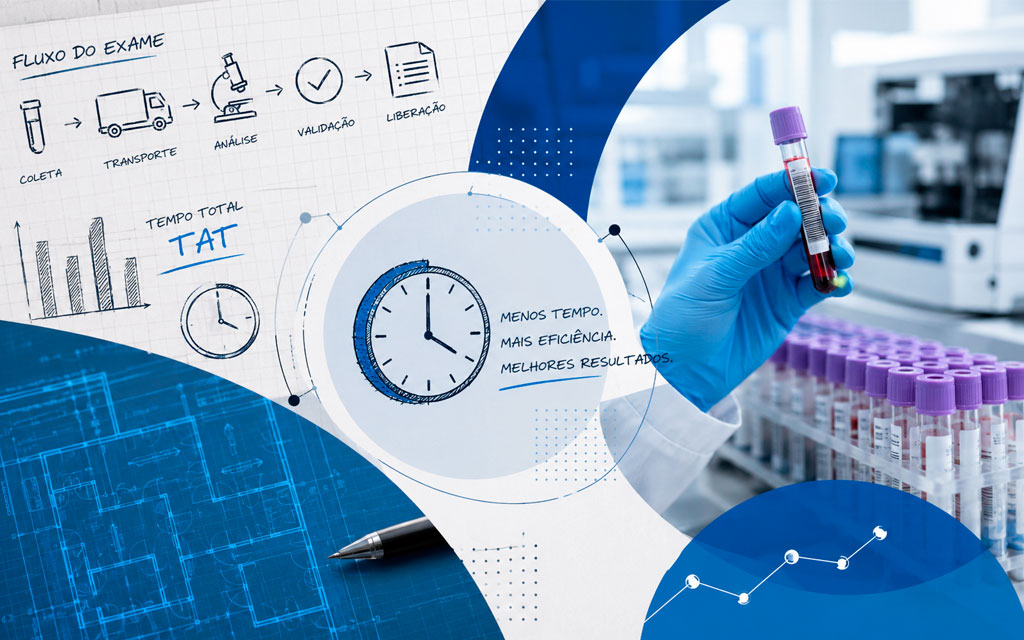
TheTurnaround Time(TAT) represents the time required for the exam to go through the process until the result is released. As the LIS system records steps and statuses, it can help identify bottlenecks, delays, and pending issues that affect this indicator.
Automation, interfacing, and monitoring should not indiscriminately accelerate critical steps. The goal is to eliminate unnecessary waiting and manual activities without compromising technical quality.
See also: Laboratory TAT: How to reduce test result turnaround time.
5. Management Information
In addition to supporting operations, the LIS produces data that can be transformed into indicators. Test volume, productivity, backlogs, turnaround time, distribution by unit, and other breakdowns help management understand laboratory performance.
When this data is consolidated into reports and Business Intelligence tools, decisions no longer depend solely on perceptions but begin to rely on operational evidence.
6. Better experience for patients and partners.
The patient may not see the system used by the laboratory, but they perceive its effects. More organized registration, fewer errors, predictability, and faster access to results contribute to a better experience.
Doctors, healthcare facilities, and partner laboratories also benefit when information circulates quickly, in a standardized way, and securely.
Integration: Why shouldn’t a LIS work in isolation?
A LIS system generates more value when it can exchange information with other components of the operation. In a modern laboratory, different technologies need to act as parts of a single workflow.
Among the integrations that can be part of this ecosystem are:
- Analyzers and laboratory equipment;
- Hospital systems;
- Electronic medical records;
- Support laboratories;
- Results portals;
- Service units and collection points;
- Business Intelligence solutions;
- Administrative and financial systems.
In analyzing an integration, it’s not enough to ask if two systems “talk” to each other. It’s necessary to understand what information will be exchanged, in which direction, how often, through which protocol, how errors will be handled, and who will be responsible for monitoring.
A well-planned integration reduces duplicate registrations and disruptions in the process. An incomplete integration, on the other hand, may simply transfer rework from one department to another.
What is the difference between LIS, LIMS, and ERP?
The acronyms can be confusing because the boundaries between solutions vary depending on the manufacturer. In general, however, each system has a main focus.
LIS
TheLISIt is geared towards the workflow of clinical and diagnostic medicine laboratories. Its structure tracks patients, requests, samples, tests, results, validations, and reports.
LIMS
TheLIMS (Laboratory Information Management SystemIt is frequently used in research laboratories, industry, environmental control, food, chemistry, and other non-clinical contexts. Its focus is usually on the management of samples, assays, methods, resources, and chains of custody.
ERP
TheERP (Enterprise Resource PlanningThis is geared towards business management. It typically focuses on areas such as finance, purchasing, billing, contracts, accounting, human resources, and inventory management.
An ERP system can complement a LIS, but it typically doesn’t replace the specialized functions of clinical workflow. Similarly, some vendors incorporate administrative features into the LIS itself or integrate different platforms. Therefore, the terminology used should be accompanied by a concrete assessment of its functional scope.
Cloud-based or on-premise LIS system?
Traditionally, laboratory systems were installed on servers maintained within the institution itself. With the evolution of cloud computing, laboratories have begun to rely on solutions hosted on specialized external infrastructures.
In a cloud-based LIS system, the application and data are made available through a remote infrastructure. This model can reduce the need to maintain local servers, facilitate the expansion of operations, and allow authorized access from different units and locations.
However, the term “cloud-based” should not be analyzed in isolation. The laboratory needs to evaluate the architecture, access controls, availability, backup routines, communication protection, support, service continuity, and the provider’s contractual responsibilities.
It is also important to recognize that security does not depend solely on the hosting location. It results from the combination of technology, processes, access management, training, monitoring, and best practices adopted by the laboratory and the supplier.
Information security, privacy and LGPD (Brazilian General Data Protection Law)
Laboratories process health-related data, classified under the General Data Protection Law as sensitive personal data. This requires heightened attention throughout the entire information lifecycle.
A Logistics and Information System (LIS) can contribute mechanisms such as authentication, profile-based permissions, activity logs, traceability, backups, and information protection. However, no software automatically makes a laboratory compliant with the LGPD (Brazilian General Data Protection Law).
Compliance also depends on definitions regarding purpose of use, legal basis, responsibilities, retention, sharing, compliance with data subjects’ rights, incident management, and training of individuals who access the data.
When evaluating a supplier, the laboratory must understand both the technical capabilities of the system and the security and privacy practices of the company responsible for the solution.
To learn more, visit Patient data protection: essential precautions for laboratories..
Which indicators can be monitored with the support of LIS?
The LIS records a large number of operational events. When this data is of high quality and properly analyzed, it can support indicators such as:
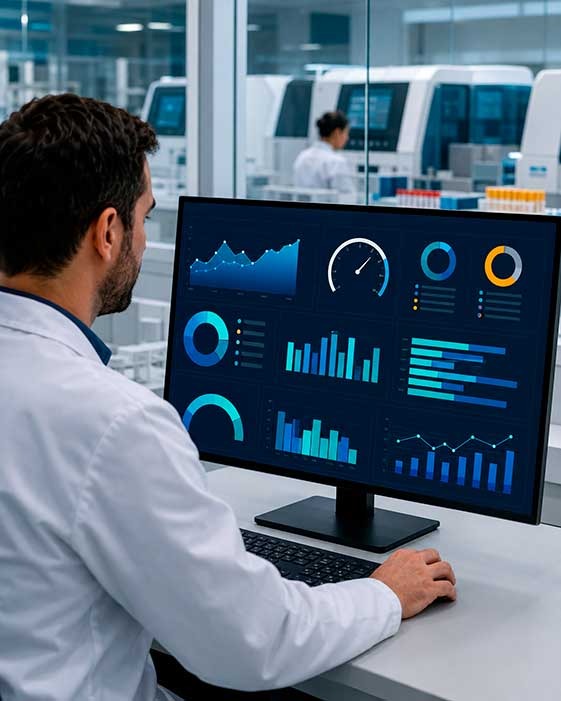
- Volume of tests by period, unit or sector;
- Average release time and TAT;
- Pending or overdue exams;
- Recollection and rework rates;
- Productivity per area;
- Distribution of demand;
- Use of equipment;
- Performance of collection units and points;
- Evolution of volumes and seasonality.
The available indicators depend on the recorded data, integrations, and contracted tools. Therefore, before building a dashboard, management must define which questions it intends to answer and what actions will be taken based on the information.
At TM Tecnologia, the LISAnalytics It complements the LISNet ecosystem by transforming laboratory data into dashboards and information for performance analysis.
When does a laboratory need to implement or replace its LIS system?
The need for change doesn’t always appear as a serious flaw. Often, it reveals itself through small bottlenecks that accumulate over time.
Some warning signs include:
- Growth in volume without a proportional increase in efficiency;
- Excessive reliance on spreadsheets and parallel controls;
- Manual entry of results;
- Lack of traceability between sectors;
- Difficulty integrating new equipment or units;
- Slowness in locating information and history;
- Insufficient management reports;
- Frequent communication failures between systems;
- Outdated technology or technology incompatible with the laboratory’s strategy;
- Support that does not keep pace with the needs of the operation.
Identifying one or more of these signs does not mean that replacement should be immediate. The first step is to map the processes, risks, and necessary integrations. Based on this diagnosis, the laboratory can decide whether it needs to correct the current configuration, expand resources, or initiate a migration project.
If the institution is already at this stage, please refer to the supplementary content. How to choose a LIS system for your laboratory: 7 essential criteria Therefore, this article remains focused on the concept and functioning of the LIS, while the other article delves into the contracting criteria.
How does LISNet connect this laboratory journey?
TheLISNetTM Tecnologia’s cloud-based LIS system is designed for managing clinical analysis laboratories. The solution connects the workflow stages, from patient registration to results release, and integrates with TM’s ecosystem of solutions.
Hosted atOracle Cloud Infrastructure (OCI)Using an Oracle database, LISNet eliminates the need for maintaining a local server for its operation. The cloud model facilitates collaboration between different units and allows authorized professionals to access information according to their profiles and responsibilities.
LISNet can also integrate with hospital systems, support laboratories, and laboratory equipment. With theTMInterfaceThe laboratory can automate communication between analyzers and the LIS, reducing manual data entry and making the workflow more seamless.
The ecosystem can be complemented by solutions such as:
- LISAnalytics: Business intelligence and indicators to support management;
- LISProdutos: Management of materials, supplies, and laboratory inventory;
- TMQuality: support for internal quality control processes;
- Portal Web TM: Integration and sharing of information with authorized support and public laboratories.
In the area of security and privacy, TM Tecnologia maintains certifications.ISO/IEC 27001 and ISO/IEC 27701, related to information security management and privacy management.
More than just digitizing isolated activities, the goal of LISNet is to connect laboratory operations within an integrated, scalable, and data-driven structure.
Learn more details on the page of LISNet — complete laboratory management.
Frequently asked questions about the LIS system
What does the acronym LIS stand for?
LIS meansLaboratory Information SystemLaboratory Information System (LIS), or Laboratory Information System, is a software specialized in managing information and processes in clinical laboratories.
Does every laboratory need a LIS system?
The need and scope vary according to the size, complexity, volume of tests, and operational requirements. However, the greater the number of patients, samples, equipment, units, and integrations, the more difficult it becomes to maintain control and traceability without a specialized system.
Does a LIS replace the lab’s ERP?
Not necessarily. LIS focuses on clinical and laboratory workflow, while ERP typically handles administrative, financial, and accounting areas. The solutions can work in an integrated way.
Can the LIS system communicate with laboratory equipment?
Yes, provided that compatibility, protocol, and interfacing are configured. The integration can send commands to the equipment and/or receive results, depending on the project.
What is the difference between LIS and LIMS?
LIS is typically geared towards clinical laboratories and the patient-sample-test-result workflow. LIMS is more common in research, industry, and other laboratories, focusing on the management of samples, assays, methods, and resources. The scope may vary between vendors.
Is a cloud-based LIS system secure?
The cloud can offer a robust infrastructure, but security depends on the architecture, access controls, monitoring, backup routines, vendor practices, and the precautions taken by the laboratory itself. The mere fact that a solution is cloud-based does not automatically guarantee security.
How long does it take to implement a LIS system?
The timeframe depends on the size of the operation, the quality of the data, the number of units and equipment, the necessary integrations, customizations, and migration planning. A secure deployment should include requirements gathering, parameterization, testing, training, and monitoring before going live.
What should be evaluated before choosing a LIS?
It is important to analyze workflow adherence, integrations, ease of use, security, traceability, growth potential, support, and the supplier’s experience in the laboratory segment. The decision should not be based solely on price.
LIS System: The foundation for a more integrated and efficient laboratory.
The LIS system is no longer just a record-keeping tool. In a modern laboratory operation, it functions as the framework that connects patients, requests, samples, equipment, professionals, results, and management information.
When properly implemented, LIS reduces disruptions between departments, decreases manual activities, enhances traceability, and provides data for continuous improvement. These gains are evident not only in internal productivity but also in the quality perceived by patients, physicians, units, and partners.
For laboratories seeking an integrated, cloud-based solution specifically designed for laboratory medicine, theLISNetIt brings together TM Tecnologia’s expertise in an ecosystem capable of supporting different stages of the operation.
💡 Want to know how TM Tecnologia can help your lab? Get in touch and discover our solutions.