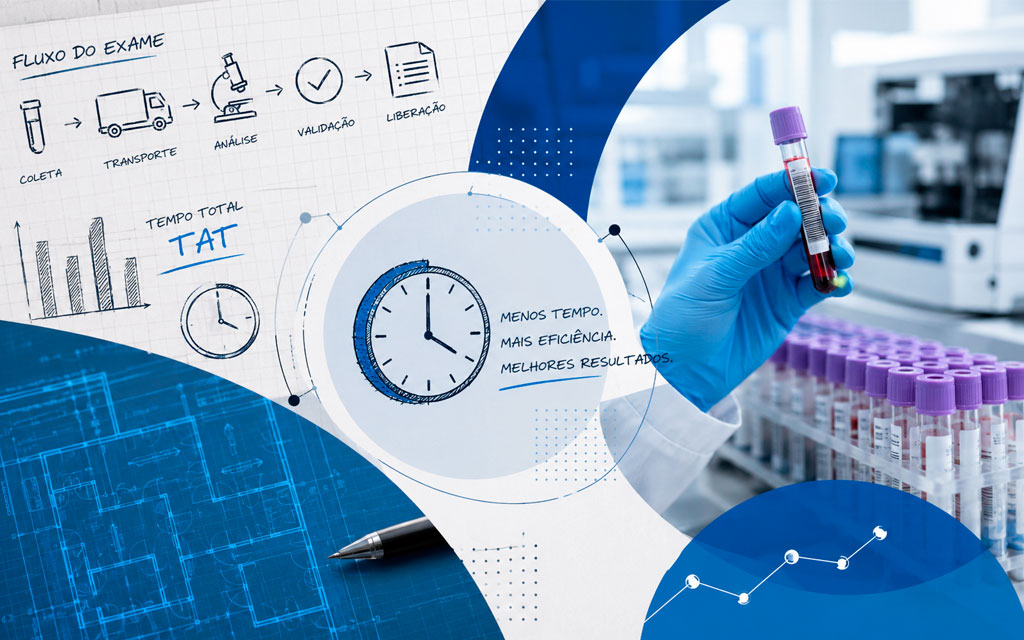
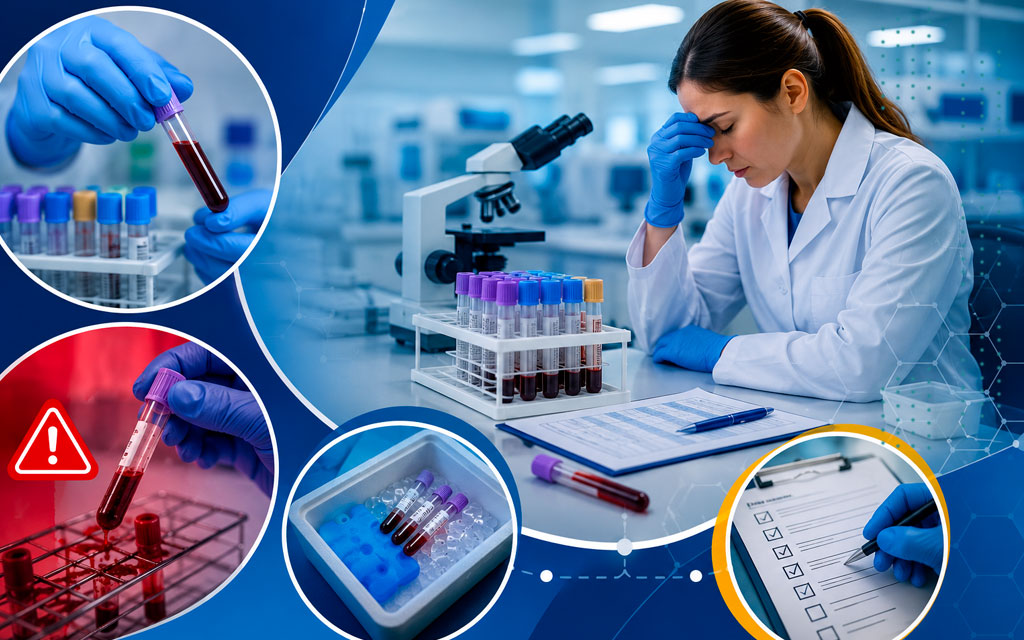
The pursuit of quality and precision in laboratory tests involves much more than modern equipment and advanced methodologies. In practice, the reliability of results begins long before the analytical stage. It is precisely in this context that the pre-analytical phase stands out as one of the most important stages of the entire laboratory process.
Although technological advancements have significantly contributed to increasing laboratory efficiency, errors in the pre-analytical phase remain a major cause of non-conformities. Furthermore, failures at this stage can directly compromise the quality of results, generate rework, increase operational costs, and impact the patient experience.
For this reason, understanding the risks involved and adopting preventive measures has become a priority for laboratories seeking operational excellence and sustainable growth.
What is the pre-analytical phase?
The pre-analytical phase encompasses all activities performed before sample analysis. In other words, it includes the entire workflow that precedes the processing of biological material.
Among the main activities of this stage are:
- Patient registration;
- Receipt of the medical request;
- Sample identification;
- Collection of biological material;
- Initial storage;
- Sample transport;
- Screening and referral for analysis.
Although these activities are part of the routine in laboratories, each one has the potential to generate errors. Therefore, proper control of this step is fundamental to guaranteeing the quality of the tests.
Why is the pre-analytical phase so critical?
The pre-analytical phase is considered one of the most sensitive in the laboratory workflow because it involves several activities that depend on human interaction. Consequently, the risk of errors increases when manual processes are not adequately controlled.
Incorrect patient identification, for example, can compromise the entire analysis chain. Similarly, problems during sample collection or transport can directly affect the reliability of the results.
Furthermore, the impacts of these failures go far beyond daily operations. Among the main consequences are:
- Need for recollection;
- Delays in releasing results;
- Increased operating costs;
- Reduced productivity;
- Patient dissatisfaction;
- Risks to clinical decision-making.
Therefore, investing in the continuous improvement of the pre-analytical phase is not just an operational issue, but also a strategic one.
📌 Read also:Bottlenecks in the clinical laboratory routine: how technology solves them.
What are the most common errors in the pre-analytical phase?
1. Incorrect patient identification
Inadequate identification remains one of the most critical failures within laboratories.
In some cases, information may be entered incorrectly or associated with the wrong patient. Furthermore, situations involving homonyms or incomplete data further increase the risk of inconsistencies.
For this reason, data verification and the adoption of standardized protocols are essential to reduce occurrences of this type.
2. Inadequate labeling of samples
Traceability depends directly on the correct identification of samples.
However, swapped labels, illegible information, or unidentified tubes are still a reality in many laboratories. Consequently, these errors hinder the tracking of materials throughout the process and increase the risk of failures.
In this sense, the use of barcodes and automated systems contributes significantly to increasing operational safety.
3. Problems during collection
Collection represents a crucial moment within the pre-analytical phase.
However, several factors can compromise sample quality, such as:
- Using the wrong type of tubing;
- Insufficient sample volume;
- Incorrect collection technique;
- Contamination of the material;
- Failure to follow patient preparation guidelines.
As a result, it is often necessary to perform a new sample collection, causing discomfort for the patient and increasing operational costs.
4. Inadequate transport and storage
After collection, the sample must be stored and transported according to specific criteria.
If these conditions are not met, the integrity of the biological material may be compromised. Furthermore, temperature variations, logistical delays, and inadequate storage can directly affect the quality of the results.
Therefore, monitoring these steps is essential to ensure the reliability of the tests.
5. Communication failures between departments
Communication also plays a fundamental role within the laboratory workflow.
When information is transmitted incompletely or incorrectly, the chances of rework and operational inconsistencies increase. Similarly, processes based exclusively on manual controls tend to generate more vulnerabilities.
Therefore, integrating information and standardizing communication between sectors is an important measure to reduce risks.
How to reduce errors in the pre-analytical phase?
Although it is impossible to completely eliminate all possibilities of failure, there are several strategies capable of significantly reducing errors in the pre-analytical phase.
Standardization of processes
Defining clear and well-documented procedures reduces operational variability. Furthermore, it facilitates the correct execution of tasks by the entire team.
Continuous training
The continuous professional development of our staff contributes to increased adherence to protocols and strengthens the culture of quality.
Furthermore, well-trained teams are able to identify risks more quickly and act preventively.
Monitoring of indicators
Monitoring indicators related to re-collections, non-conformities, and operational failures allows for the identification of opportunities for improvement.
In this way, management begins to make decisions based on data and not just on perceptions.
Sample traceability
Traceability allows you to track the entire sample journey, from collection to the release of the result.
Consequently, it becomes easier to identify flaws, conduct audits, and increase the security of processes.
Operational automation
Automation reduces reliance on manual tasks and minimizes the occurrence of human error.
Furthermore, it contributes to increased productivity, reduced rework, and improved operational efficiency.
The role of technology in preventing failures.
In recent years, technology has come to play an increasingly important role in laboratory management.
Through automation and process integration, it became possible to reduce vulnerabilities and increase control over the entire sample journey.
Among the main tools used by the laboratories are:
- Laboratory management systems (LIS);
- Barcode identification;
- Real-time traceability;
- Integration between sectors;
- Automated process control;
- Monitoring of operational indicators.
In addition to reducing errors in the pre-analytical phase, these solutions contribute to improving productivity, increasing patient safety, and strengthening the quality of services provided.
Errors in the pre-analytical phase continue to represent one of the biggest challenges in routine laboratory work. However, many of these problems can be avoided through a combination of well-structured processes, skilled teams, and appropriate technologies.
Furthermore, investing in the continuous improvement of this stage brings benefits that go far beyond reducing errors. After all, laboratories that strengthen their pre-analytical processes are able to increase operational efficiency, reduce costs, improve the patient experience, and increase the reliability of results.
Therefore, more than just an operational step, the pre-analytical phase should be seen as a strategic element to ensure quality, safety, and sustainable growth in the laboratory environment.
💡 Want to make your lab more efficient?Discover the solutions offered by TM Tecnologia.Contact us via WhatsApp.