The routine of a clinical laboratory involves several sectors working simultaneously: reception, collection, triage, technical analysis, validation, and release of results. However, when these sectors are not properly integrated, delays, rework, and loss of productivity occur.
For this reason, the integration between laboratory sectors It has become a strategic factor in ensuring operational efficiency, information security, and speed in delivering results.
In this article, you will understand how process integration, combined with the use of appropriate technology, can transform laboratory operations.
Why is integration between sectors so important?
In many laboratories, processes still rely on manual communication between departments. That is, information needs to be re-entered, printed, or relayed verbally.
Consequently, this model increases the risk of errors and generates wasted time. Furthermore, it makes it difficult to control the workflow.
When departments are integrated through a structured system, the flow of information becomes automatic. This ensures that each stage of the process receives the necessary data at the right time.
In this way, the operation becomes more organized and predictable.
Among the main benefits are:
- reducing rework
- greater speed in processes
- reduction of operational errors
- traceability of information
- better management of laboratory routines
Furthermore, the integration allows managers to monitor important indicators in real time.
Where do bottlenecks occur in the laboratory?
Lack of integration often creates bottlenecks at different stages of the operation. In many cases, these problems go unnoticed in day-to-day operations.
However, by analyzing the workflow more closely, it is possible to identify critical points.
Reception and registration
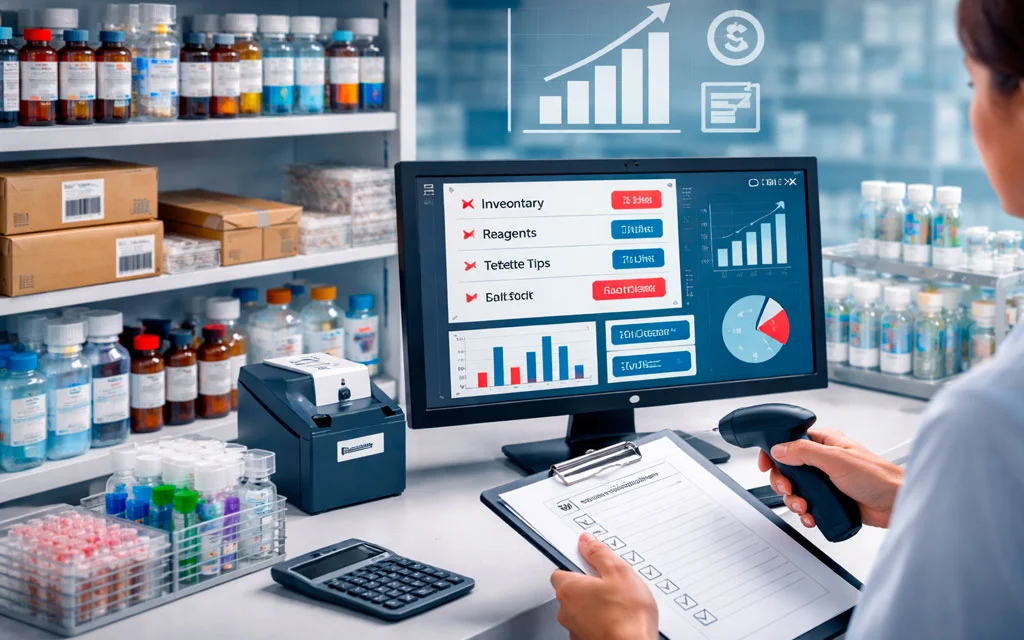
When patient or exam records are not integrated with the rest of the system, a lot of information needs to be re-entered into the equipment or in separate spreadsheets.
As a result, the process becomes slower. Furthermore, the chance of inconsistencies in the data increases.
Consequently, small errors can lead to rework in subsequent steps.
Communication with equipment
Another common problem occurs when laboratory equipment is not integrated into the system.
In this scenario, the results need to be entered manually. Naturally, this process is time-consuming and increases the risk of human error.
On the other hand, when there is interfacing between equipment and the system, the results are sent automatically.
Thus, the workflow becomes more agile and reliable.
Validation and release of results
Without proper integration, the validation of exams may depend on different systems or separate records.
Consequently, the professional in charge needs to seek information from various sources.
In addition to delaying the process, this increases the possibility of errors.
On the other hand, when all the data is centralized, the analysis becomes faster and more secure.
How does technology solve this problem?
The integration between sectors of the laboratory depends directly on a well-defined technological structure.
In this context, three elements are fundamental.
Structured LIS system
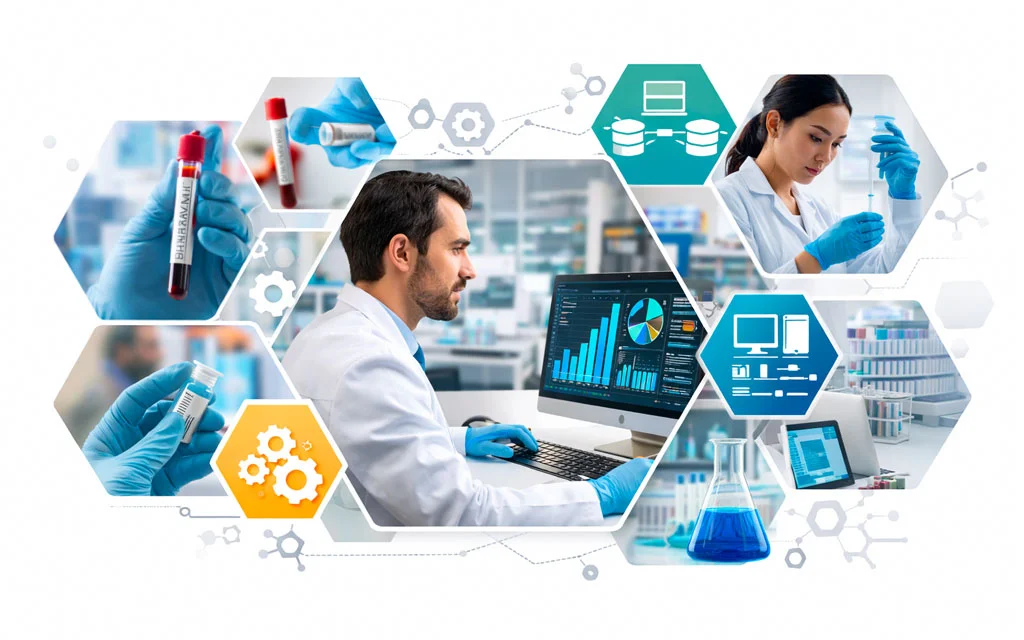
The LIS functions as the center of laboratory operations, connecting the different sectors and organizing the flow of information.
Furthermore, it ensures complete traceability of the processes.
In this way, all stages of the exam are recorded within a single environment.
💡 READ ALSO:
📌 What is a LIS system and why is it essential for clinical laboratories?
Interfacing with equipment
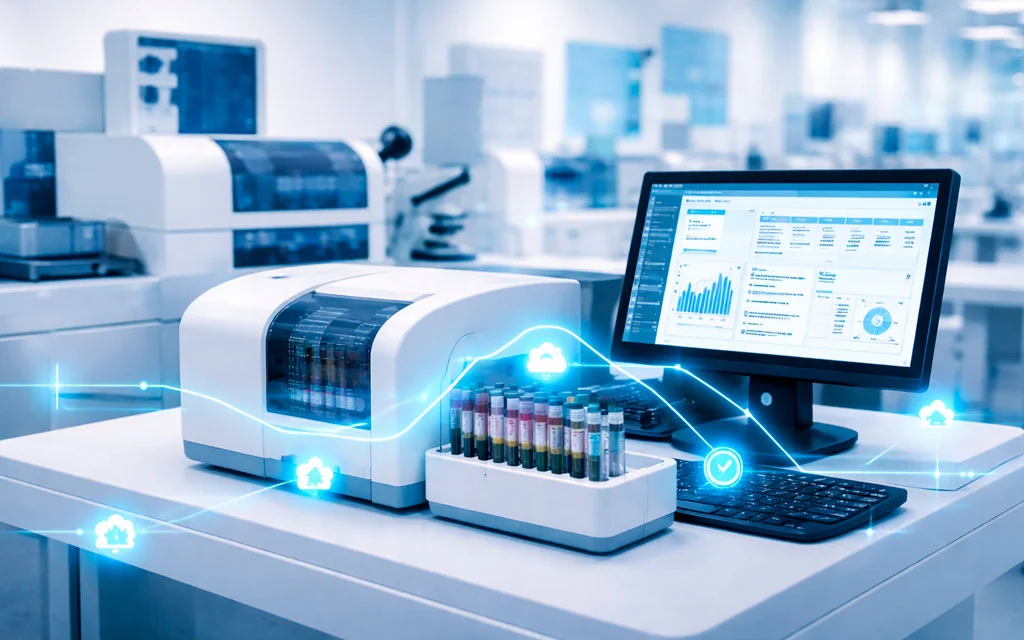
The interface allows laboratory equipment to automatically send results to the system.
Thus, manual typing is eliminated. Consequently, the occurrence of errors is significantly reduced.
Furthermore, the process becomes much faster.
Organization of the operational flow
Even with the technology available, it is essential that the laboratory organizes its processes in a structured way.
This includes, for example:
- clear definition of operational steps
- process standardization
- monitoring of indicators
- integration between technical and administrative sectors
In this way, technology begins to act as a facilitator of the operation.
Direct impacts on productivity
When integration between sectors is well implemented, results appear quickly.
Firstly, the laboratory gains more agility in its processes, since information circulates automatically between departments.
Furthermore, there is a significant reduction in rework, as eliminating manual typing prevents subsequent corrections.
At the same time, operational capacity increases. This happens because the laboratory is able to process more tests without necessarily expanding the staff.
Finally, the quality of information improves, since traceability ensures data security and reliability.
Integration also improves decision-making.
Another important benefit of integration is the ability to monitor operational indicators in real time.
With this information available, managers can better analyze the laboratory’s performance.
Among the most important indicators are:
- average time for results to be released
- rework rate
- volume of exams per period
- productivity by sector
This makes it easier to identify bottlenecks and implement improvements.
Integration between sectors is no longer just an operational improvement. Today, it represents a strategic necessity for clinical laboratories.
When processes, equipment, and systems work in a connected way, the laboratory gains efficiency and significantly reduces rework.
Furthermore, productivity increases and the quality of information improves.
Therefore, investing in technological integration is a fundamental step for laboratories that wish to grow safely, with organization and a high level of efficiency.
📌 Want to understand how technology can optimize your lab’s operations?
🔗 Visit the TM Tecnologia website and discover our solutions.
🌐 tmtecnologia.com
💬 Contact us viaWhatsApp: (11) 94075-1513