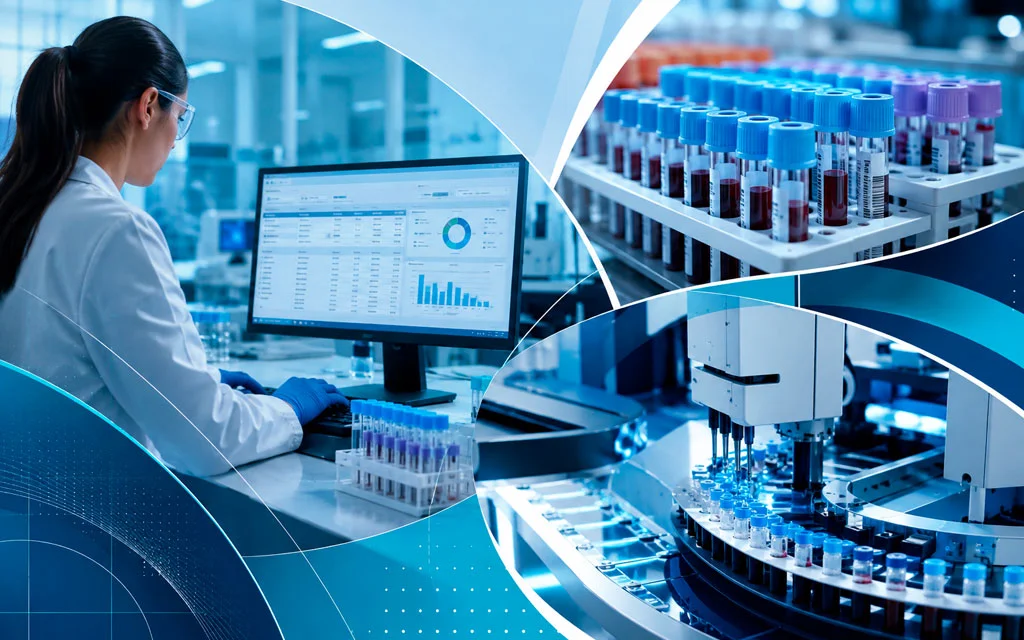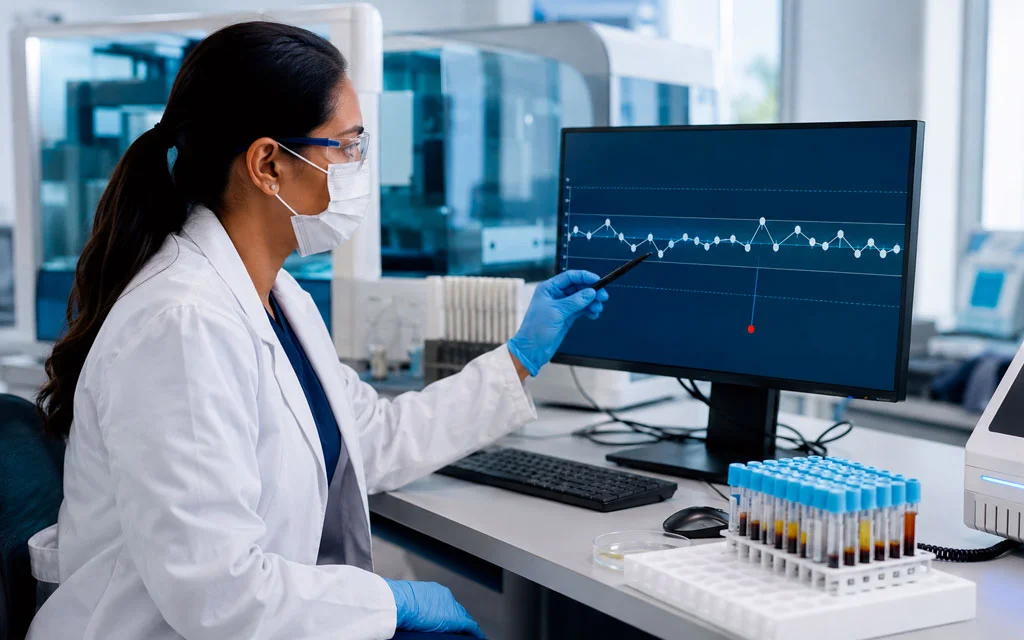
The routine of a clinical laboratory depends directly on the accuracy and reliability of the results. In that regard Understanding what laboratory equipment interfacing entails is essential to ensuring safety, speed, and efficiency in processes.
Currently, when there is no interfacing, many laboratories still rely on manual data entry of results. As a consequence This scenario increases the risk of errors, generates rework, and causes delays in the release of test results.That’s why Interfacing has ceased to be a differentiating factor and has become a fundamental resource for modern laboratory management.
What is laboratory equipment interfacing?
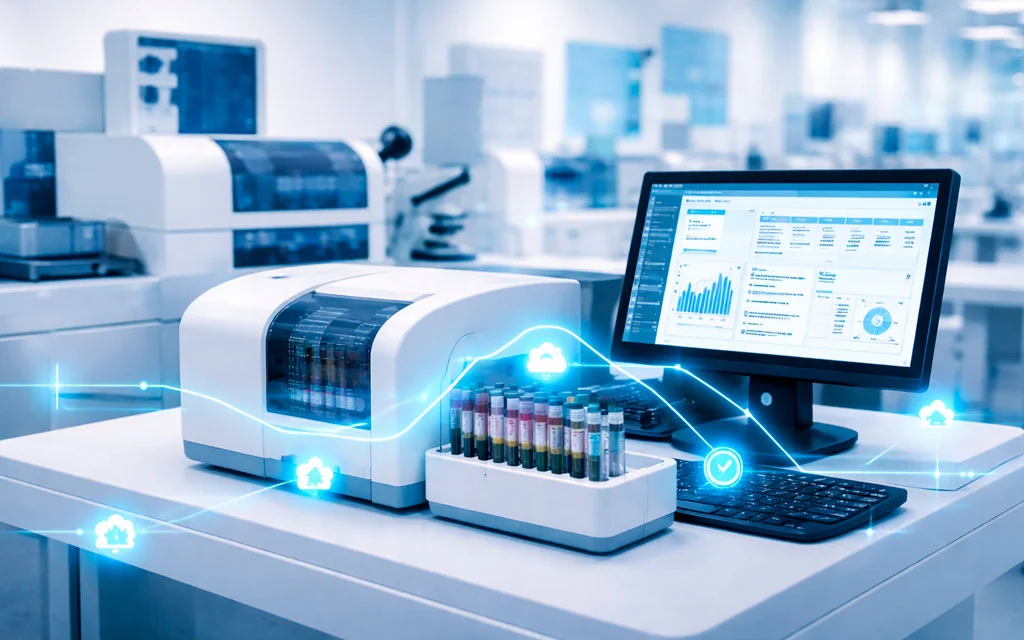
Laboratory equipment interfacing is the process that enables automatic communication between analytical equipment and the laboratory system, usually a LIS (Laboratory Information System).
In practice, this means that the results generated by the equipment are sent directly to the system, without the need for manual data entry. That way The flow of information becomes faster, safer, and more reliable.
Furthermore, the interfacing ensures data standardization and complete traceability of the tests. Like this The laboratory gains more control over the entire analytical process, from analysis to the release of the report.
How does interfacing work in practice?
The interfacing process involves configuring the communication between the equipment and the laboratory system. Normally This communication occurs through specific protocols that allow for the structured exchange of information.
Once configured, the equipment automatically sends the test results to the LIS system. Right away The system organizes this information, links the data to the correct patient, and makes the results available for review and release.
Consequently, the laboratory gains more control over the analytical workflow. Furthermore Human interference in the process is significantly reduced.
Main problems of laboratories without interfacing.
The lack of interfacing creates several operational bottlenecks. In general These problems directly affect the productivity and safety of the processes.
Among the main impacts, the following stand out:
- Manual entry of results;
- Greater risk of errors and inconsistencies;
- Constant rework for verification;
- Slow release of test results;
- Lack of complete traceability.
With increased demand, these problems become even more critical. That’s why The lack of interfacing begins to compromise the quality of the service provided.
Benefits of interfacing laboratory equipment
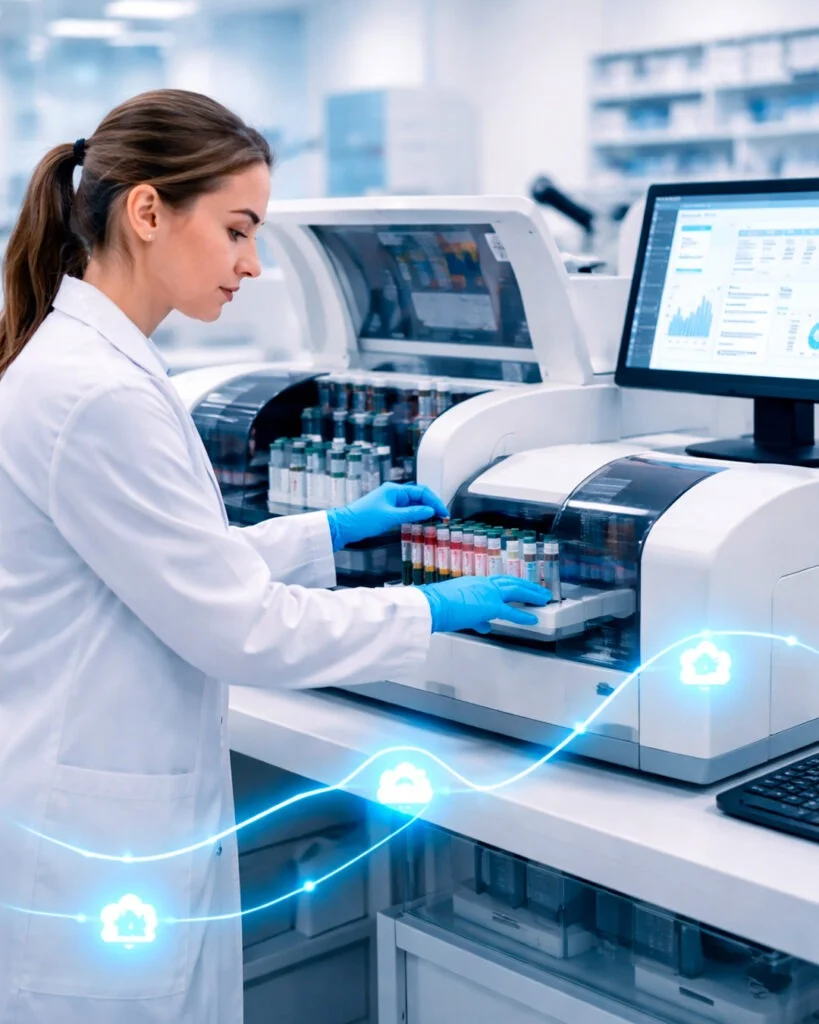
Implementing interfacing brings significant benefits to the clinical laboratory.To be continued See the main benefits of this automation.
Reduced errors and increased safety.
By eliminating manual typing, the interface drastically reduces the possibility of human error. In this way As a result, the outcomes become more reliable and secure.
Agility in processes
With results automatically arriving in the system, the time it takes to release exam results is reduced. As a result The laboratory improves productivity and speeds up patient care.
Standardization and traceability
The interfacing ensures that all data follows a single standard within the system. Furthermore Each step of the process is recorded, which facilitates audits and quality control.
Increased productivity for the team.
With fewer manual tasks, the lab team can focus on more strategic and analytical activities. Like this The work becomes more efficient, organized, and predictable.
Interface and LIS system: what is the relationship?
The interfacing works in an integrated way with the LIS system. In other words The LIS (Logistics Interface) receives, organizes, and manages the data sent by the devices.
For this reason, a robust and well-configured LIS system is essential for the interfacing to function correctly. Otherwise As a result, the laboratory loses a large part of the benefits of automation.
When should a laboratory invest in interfacing?
Several signs clearly indicate that the time has come to invest in interfacing.Among themAmong the highlights are:
- Growth in the volume of tests;
- Increased typing errors;
- Difficulty in maintaining traceability;
- Excessive rework;
- Slow release of results.
If one or more of these points are part of the laboratory’s routine, interfacing can transform the operation. In this context The decision ceases to be merely technical and becomes strategic.
The role of TM Tecnologia in laboratory interfacing.
TM Tecnologia specializes in solutions for clinical laboratories.That’s why It offers secure, stable, and efficient equipment interfacing.
Furthermore, with experience in different brands and models of equipment, TM Tecnologia guarantees complete integration with the LIS system.That way Each laboratory has a solution tailored to its operational reality.
Thus, the laboratory gains more security, agility, and control over its processes.
Understanding what laboratory equipment interfacing entails is fundamental for laboratories seeking efficiency, safety, and sustainable growth. In summary Proper automation eliminates errors, reduces rework, and improves productivity.
Therefore, investing in interfacing is not just an operational improvement. In practice This is a strategic decision to raise the level of management and quality of the laboratory.
💡 Want to know how to implement interfacing in your lab? Discover the solutions offered by TM Tecnologia.