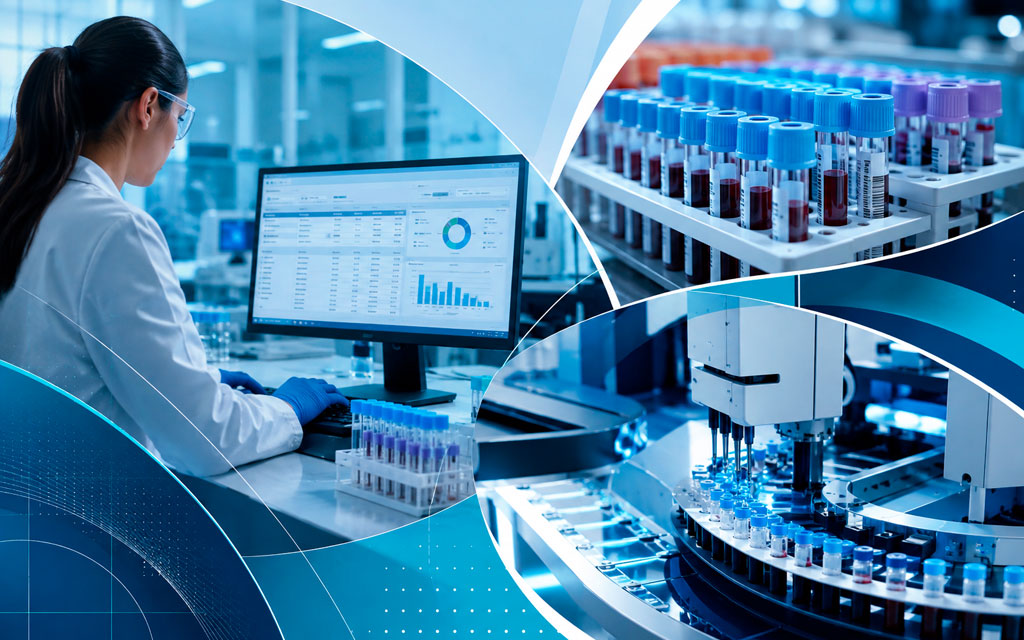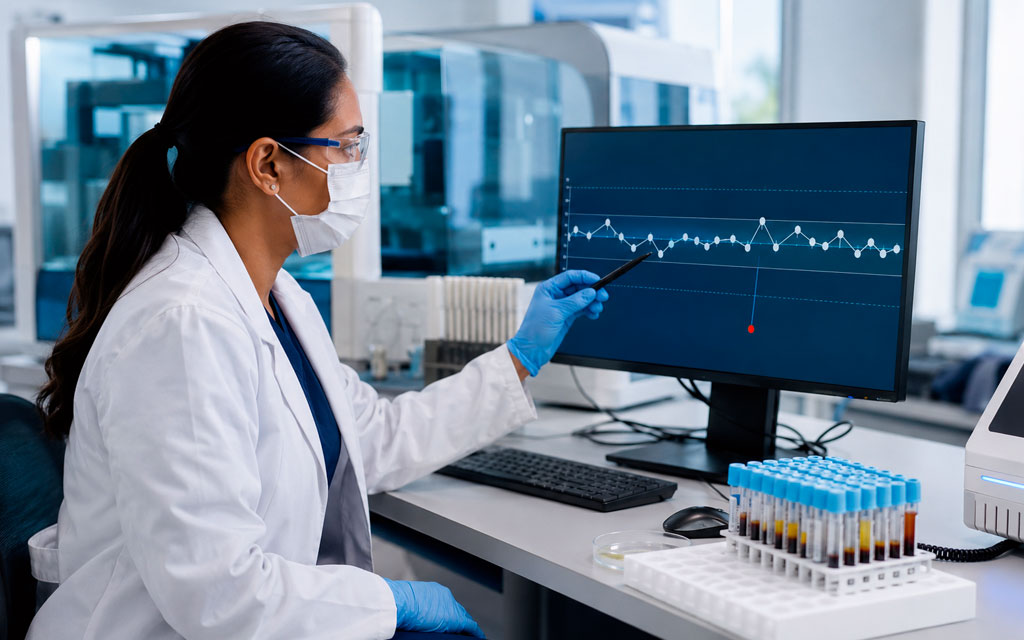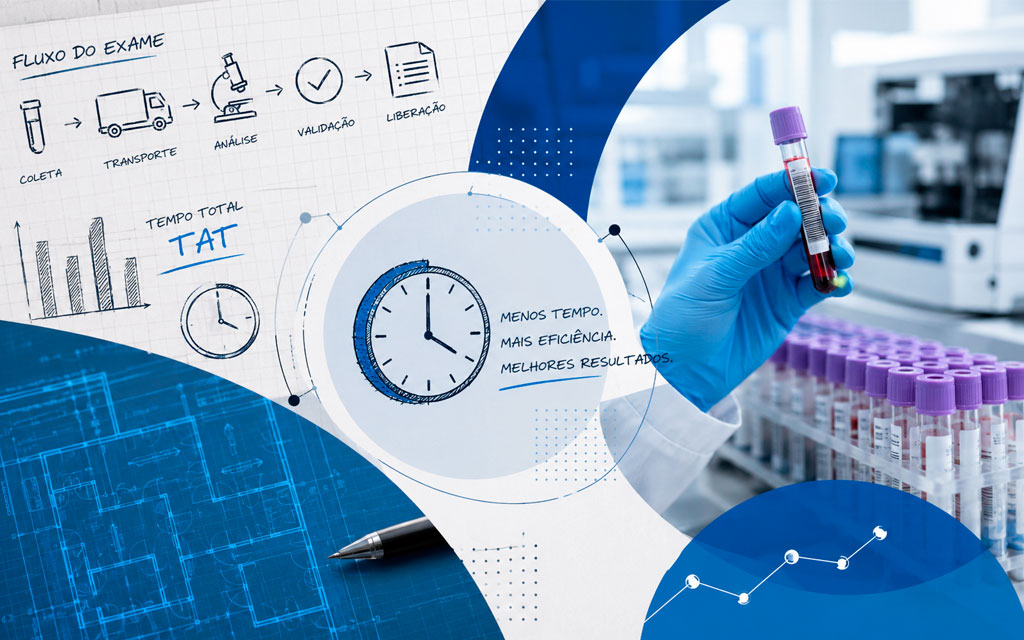
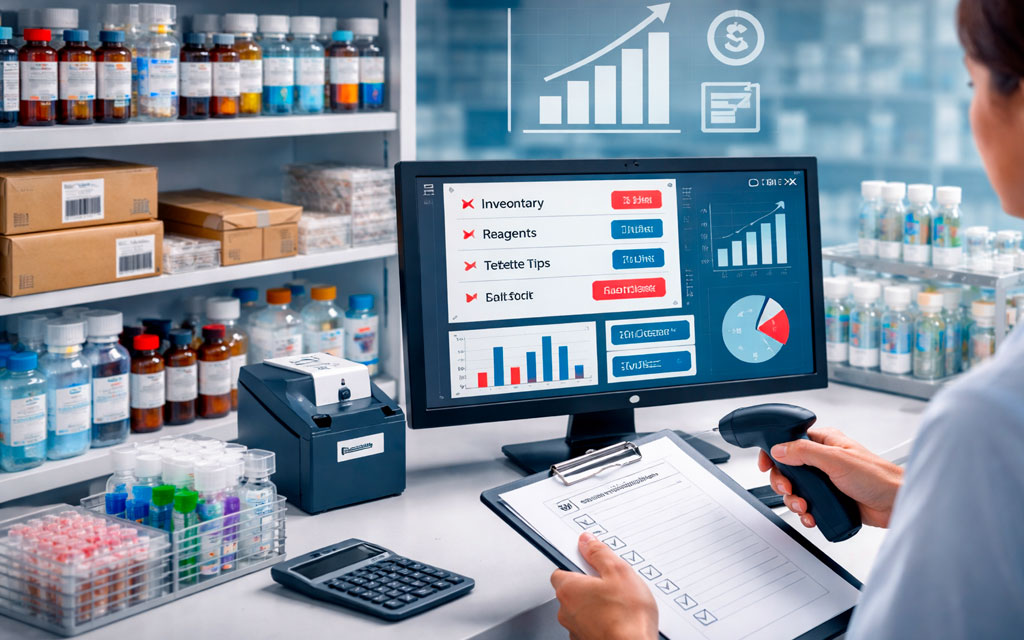
Materials management within a laboratory goes far beyond simply controlling inventory. In practice, it directly impacts operational costs, team efficiency, and, most importantly, the financial predictability of the business.
Nevertheless, many laboratories face recurring problems, such as losses due to expiration, unnecessary purchases, and a lack of visibility into the actual consumption of supplies.
Therefore, adopting intelligent materials management has ceased to be a competitive advantage and has become a strategic necessity.
The invisible problem: losses that don’t appear in the reports.
In many cases, losses related to inventory are not easily identified. After all, they happen silently in the day-to-day operation.
For example, expired materials, duplicate purchases, and uncontrolled use of supplies are common occurrences. However, because these events are not clearly documented, they often go unnoticed.
Furthermore, the lack of integration between departments contributes to this scenario. While one department requests materials, another may not have visibility of the current inventory, leading to unnecessary purchases.
Consequently, the laboratory loses not only money, but also efficiency.
Why manual control is no longer sufficient
Although many laboratories still use spreadsheets or manual controls, this model has significant limitations.
Firstly, it relies on constant updates from the team, which increases the risk of human error. Furthermore, it doesn’t offer a real-time view of the operation.
Another critical point is the difficulty in generating strategic analyses. Without organized data, it becomes virtually impossible to predict consumption, identify patterns, or plan purchases accurately.
As a result, important decisions end up being made based on estimates — and not on concrete data.
Smart management: more control, less waste
On the other hand, when the laboratory starts using a structured solution for materials management, the scenario changes completely.
With a smart approach, it is possible to:
- Monitor input consumption in real time.
- identify materials at risk of expiring
- avoid duplicate purchases
- organize the flow of incoming and outgoing products
- to have more control over operational costs
Furthermore, centralizing information allows all sectors to work in an integrated manner, reducing errors and rework.
Thus, the laboratory gains more control, predictability, and efficiency.
Financial predictability: the key differentiator
One of the greatest benefits of efficient materials management is improved financial predictability.
This happens because, by understanding exactly how supplies are consumed, the laboratory can better plan its purchases and avoid unexpected expenses.
Furthermore, it is possible to:
- project future costs more accurately.
- Reduce waste that impacts cash flow.
- Better balance the capital invested in inventory.
- to make more strategic decisions about acquiring materials
Therefore, materials management ceases to be merely operational and takes on a fundamental role in the financial health of the laboratory.
The role of LISProducts in materials management.
In this context, having a specific solution for materials management makes all the difference.
THE LISProdutos It was developed specifically to meet the needs of laboratories, offering complete control over the supplies used in the operation.
With it, it is possible to:
- monitor inventory levels in real time
- control the expiration dates of materials
- track consumption by sector
- Generate strategic reports.
- integrate materials management with the rest of the laboratory operation
Furthermore, integration with other systems ensures that information flows automatically, reducing errors and increasing efficiency.
In this way, the laboratory begins to operate with much more control and safety.
How to start transforming your laboratory management.
Implementing intelligent materials management doesn’t require complex changes, but rather strategic decisions.
The first step is recognizing that inventory control directly impacts laboratory results. Next, it’s crucial to invest in tools that bring visibility and organization to the process.
Furthermore, integrating materials management with other departments is essential to ensure operational fluidity.
With this, the laboratory not only reduces losses, but also improves its capacity for planning and growth.
💡 Speak to our experts. Discover how we can help your lab evolve with greater intelligence and precision.